


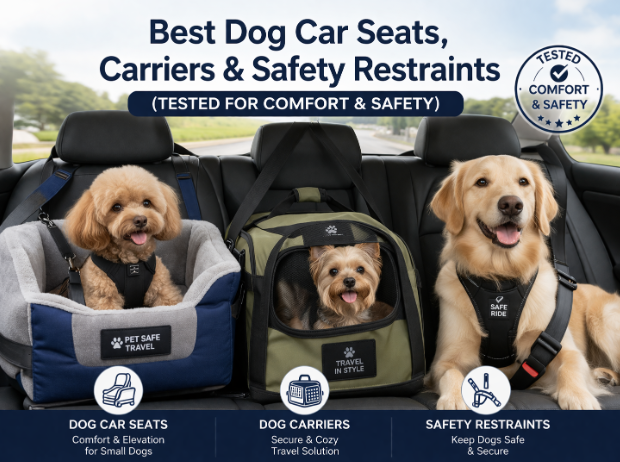
Best Dog Car Seats, Carriers & Safety Restraints (Tested for Comfort & Safety)
A loose dog in the car can turn any drive into a scramble. For UK owners planning safer travel, the best setup balances comfort, stability and a secure fit.
Recent 2026 review coverage points to the Kong Ultimate Booster as a strong all-round option, the PetSafe Happy Ride Booster for value, and PupSaver for buyers focused on crash-test claims. Still, the right choice comes down to your dog’s size, travel habits and your car’s layout.
How to choose the right dog car seat for your dog and your car
Start with fit. A dog car seat should match your dog’s weight, length and sleeping shape, not only the breed on the label. Check the weight limit, seat height, attachment method, and whether the cover comes off for washing. Also look for something you can fit quickly and tighten properly. Booster seats usually suit small dogs, while larger dogs often travel better in a harness or carrier. Never clip any restraint to a collar.
Key Takeaways
- A loose dog in the car is a safety risk
- Even a calm dog can become a distraction or get injured without proper restraint.
- The best setup balances safety, comfort, and stability
- No single product works for every dog—your choice should match your dog and your car.
- Fit matters more than breed labels
- Always choose a car seat or restraint based on your dog’s weight, size, and behavior.
- Booster seats are best for small dogs
- They provide elevation, comfort, and a better view, which can help reduce anxiety.
- Larger dogs need harnesses or seat belt restraints
- Boosters often aren’t suitable for bigger dogs—secure harness systems work better.
- Stable installation improves safety and reduces stress
- Features like strong straps and ISOFIX-style anchors help keep the seat steady.
- Never attach restraints to a dog’s collar
- Always use a harness to avoid serious injury during sudden stops or accidents.
- Crash-test claims should be checked carefully
- Some products advertise safety testing, but independent verification may be limited.
- Carriers are ideal for small or anxious dogs
- Enclosed spaces can help nervous dogs feel more secure and reduce movement.
- Test your setup before long journeys
- Install everything at home and take a short drive to ensure comfort and stability.
Check size limits, anchor points and how steady the seat feels
Look for secure fixing points, strong headrest straps and, where offered, ISOFIX-style anchors. A steady seat wobbles less, and that can help some dogs stay calmer on long trips or when they feel sick in the car.
Put comfort second only to safety
Padding, raised sides, a soft base and washable dog car seat covers all help. A relaxed dog is less likely to shuffle about and distract you. For a broader look at how safety varies across products, see Car and Driver’s tested 2026 guide.
Best tested picks for comfort and safety in 2026
These are best seen as well-reviewed stand-out options, not perfect picks for every dog, because independent 2026 crash-test data for boosters remains limited.
Best overall for small dogs, Kong Ultimate Booster
Review coverage, including Smart Bark’s Kong Ultimate Booster review, highlights its ISOFIX attachment, soft padded base, side cushions, headrest support and built-in tether. That multi-point fit can help create a smoother ride, so it suits small dogs and can work well for nervous travellers.
Best budget dog car seat, PetSafe Happy Ride Booster
The PetSafe Happy Ride Booster is the value option for small dogs up to 8kg. It lifts them for a better view, uses secure straps, and has a removable fleece cover. It’s easy to clean, simple to fit, and a sensible choice for everyday journeys.
Best if crash safety is your top concern, PupSaver
PupSaver stands out for its maker’s 35 mph crash-test claim for dogs up to about 20kg. That claim appears in current review data, but it isn’t backed by a current CPS rating. If crash protection matters most, it’s worth shortlisting, but check compatibility with your dog and car before buying.
When a carrier or travel harness is the better choice
Not every dog needs a booster. Some settle better in a carrier, while bigger dogs often need a restraint that works with the car’s seat belt.
Carriers suit very small dogs and dogs that settle better in enclosed spaces
A good carrier can reduce movement and help timid dogs feel more secure. Choose one with airflow, sturdy sides and proper restraint points.
Safety restraints can work better for bigger dogs
Larger dogs often need a crash-tested harness used with the car’s seat belt system, especially if they exceed booster seat limits. The aim is simple: limit movement without causing discomfort.
Your best option depends on size, behaviour and car layout, not marketing claims alone. Kong suits all-round small-dog use, PetSafe offers value, and PupSaver appeals most to buyers focused on crash-test claims.
Before your next journey, fit everything at home and take a short practice drive. A safe setup should feel steady and uneventful.
Frequently Asked Questions
1. What is the safest way for a dog to travel in a car?
The safest way is to use a properly fitted dog car seat, carrier, or crash-tested harness. These options help limit movement and reduce the risk of injury during sudden stops or accidents.
2. Are dog car seats actually safe?
Yes, dog car seats can be safe when installed correctly and used with a harness. However, their safety depends on stability, proper fit, and secure attachment points.
3. Should dogs sit in the front or back seat?
Dogs should always travel in the back seat. The front seat can be dangerous due to airbags, which can seriously injure pets during a collision.
4. What is better: a dog car seat or a harness?
It depends on your dog’s size. Car seats are ideal for small dogs, while larger dogs are safer with a crash-tested harness attached to the seat belt.
5. Are dog seat belts safe for all dogs?
Dog seat belts are safe when used with a harness, not a collar. They work best for medium to large dogs and help keep them secure without restricting comfort.
6. How do I choose the right dog car seat?
Choose based on your dog’s weight, size, and behavior. Also check the seat’s stability, attachment system, and ease of installation in your car.
7. Are crash-tested dog car seats worth it?
Yes, especially if safety is your top priority. However, always check if the crash-test claims are independently verified before buying.
8. Can I use a regular carrier for car travel?
Yes, but it should be sturdy, well-ventilated, and properly secured inside the car. Not all carriers are designed for car safety.
9. Why shouldn’t I attach a dog restraint to a collar?
Attaching to a collar can cause serious neck injuries during sudden braking. Always use a harness for safer restraint.
10. How can I make my dog more comfortable during car rides?
Use a padded seat or carrier, keep the setup stable, and take short practice trips. A calm and secure environment helps reduce anxiety.